

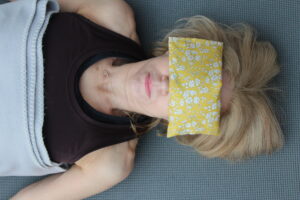
The Mighty Eye Pillow: A Small but Powerful Invitation to Rest (8 min read)
At a recent festival, I spent a great deal of
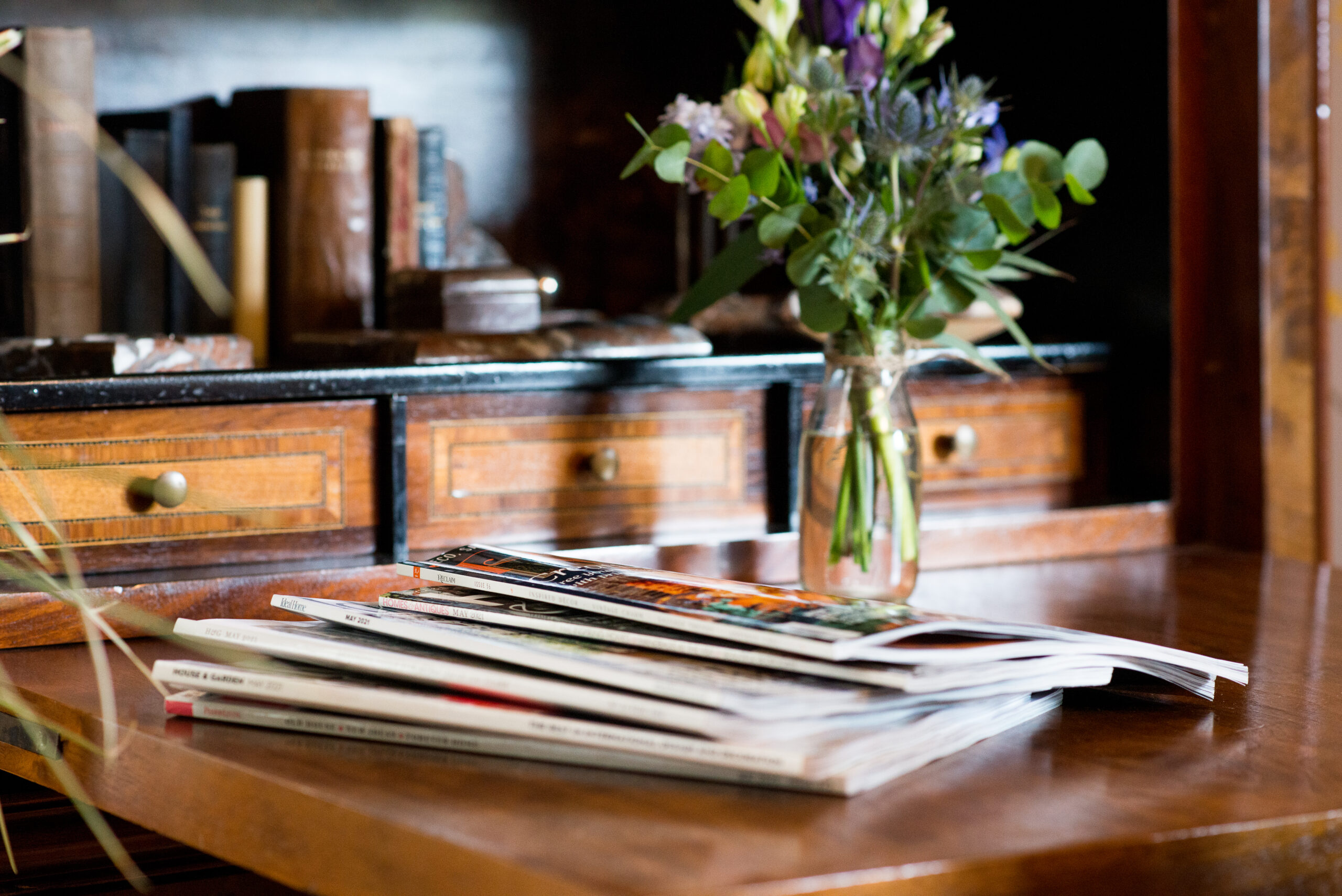
There is something deeply grounding and connecting about living with objects that have already had a life before they reach us.
A vintage side table with gentle signs of use. A re-upholstered chair with a whole story in its frame alone. A decorative antique that brings character, soul and perhaps a quiet sense of history into a room. These pieces are beautiful, of course, but for me they represent something more than aesthetics. They speak to a more mindful way of living. One that values longevity over disposability, craftsmanship over convenience, and meaning over excess.
Thankfully, over the last decade or so, sustainability has gained more attention and even popularity among the younger generations. Circular economy, conscious consumption and reducing waste are now part of everyday conversation, and the impact of fast fashion is being scrutinised more than ever, with some countries (like France) passing landmark bills targeting ‘ultra-fast’ fashion, but for some of us, this is not a new concept or a trend. It is simply something that has always felt natural, shaped by the values we grew up with.
I grew up around antiques, restoration and interiors with character. My father worked with antique furniture, and from a very young age I was surrounded by pieces that were admired not because they were shiny and new, but because they were well made, beautiful, worth saving and full of history. Back then, we did not call it circular living. We simply understood the value of quality, repair and longevity.
Later, in the 1990s, I worked in the automotive aftermarket, where remanufactured spare parts became an increasingly important conversation. Even then, the reasoning was clear: protecting scarce natural resources, reducing energy use and recognising that repairing or remanufacturing existing parts often has a lower environmental impact than producing an entirely new part. That really stayed with me.
Looking back, I can see that this thread has run through my life for decades.
Today, as I bring together my love for upholstery and sewing, my passion for beautiful interiors, and my growing focus on sourcing and curating vintage and decorative antiques, it feels less like a new direction and more like a natural evolution.
Because choosing antique, vintage or handcrafted accessories for yourself or your home is not only a design choice. It can also be a more responsible one.
In a circular economy, the aim is to keep products and materials in use for as long as possible through reuse, repair, refurbishment and remanufacture, rather than constantly replacing them with new versions. That principle sits beautifully within the world of interiors. An antique chest of drawers, a reupholstered chair, a vintage lamp or vase, beautiful porcelain bowls or a reclaimed side table – all of these extend the life of existing materials and reduce the demand for new pieces.
And there is another layer to this too. Older pieces were often made differently. They were created with longevity in mind, with solid materials, skilled craftsmanship and details that are harder to find in much of today’s mass-produced homeware. Not everything old is automatically better, of course. But many vintage and antique pieces have already proven their durability simply by still being here, after decades or centuries.
That matters.
Because one of the quieter problems of modern consumption is not just how much we buy, but how quickly and easily we replace. Furniture and home or fashion accessories are too often treated as temporary, bought for a moment, a season or a trend, then discarded when they no longer fit. A circular approach asks something different of us. It invites us to buy less, choose better, care for what we own, and see potential where others see something outdated.
For me, this is where mindful living and interiors meet.
Mindful living is not only about meditating on a one-of-a-kind, handmade meditation cushion, slow mornings or wellness rituals, however lovely those may be. It is also about what we bring into our homes, how intentionally we choose it, and whether it adds something lasting to our lives. A home filled with carefully chosen pieces feels very different from one that has been pulled together too quickly and without real thought. It feels more personal. More grounded. More expressive. More conscious.
Decorative antiques and vintage finds bring something wonderfully individual into a space. They soften the uniformity of modern interiors. They create contrast, warmth and depth. They invite curiosity. They often carry traces of the hands that made them and the homes they have lived in before. In a world of sameness, that feels increasingly precious.
The same can be said for upcycled and restored furniture. Reupholstery, repair and creative restoration are not simply about saving money or making do. They are acts of preservation and creativity. They allow us to honour the structure of a piece, retain what is valuable, and reimagine it for modern living.
This is also why I believe sustainability in the home should not feel joyless, worthy or stripped of character. It can be deeply beautiful. It can be layered, elegant and full of character. A more conscious home does not have to mean sacrificing style. In many ways, it can mean the opposite: creating rooms with more soul, more originality and more lasting appeal.
That is very much the direction I am moving in now.
Alongside my handmade pieces, I am now increasingly stepping into my father’s footsteps by sourcing and curating decorative antiques, vintage pieces and upcycling or reimagining existing pieces that bring beauty, function and history into everyday spaces. Pieces that have earned their place. Pieces that tell a story. Pieces that prove sustainability is not just about what is recycled, but about what is respected, restored and used well.
Perhaps that is what circular living really means in practice.
Not perfection. Not never buying anything new again. But becoming more mindful about what we choose, what we keep, what we restore and what we pass on.
A more mindful home is often built piece by piece, over time.
And sometimes, the most sustainable thing we can do is to give something old and beautiful another life.
Love,
Nad x
At a recent festival, I spent a great deal of

A personal reflection on a restored antique cabinet, a drawer full of obsolete charging cables, and what the objects we keep can teach us about circular living, memory and lasting value.

This Christmas, the dash for last-minute stocking fillers is giving
| Cookie | Duration | Description |
|---|---|---|
| cookielawinfo-checkbox-analytics | 11 months | This cookie is set by GDPR Cookie Consent plugin. The cookie is used to store the user consent for the cookies in the category "Analytics". |
| cookielawinfo-checkbox-functional | 11 months | The cookie is set by GDPR cookie consent to record the user consent for the cookies in the category "Functional". |
| cookielawinfo-checkbox-necessary | 11 months | This cookie is set by GDPR Cookie Consent plugin. The cookies is used to store the user consent for the cookies in the category "Necessary". |
| cookielawinfo-checkbox-others | 11 months | This cookie is set by GDPR Cookie Consent plugin. The cookie is used to store the user consent for the cookies in the category "Other. |
| cookielawinfo-checkbox-performance | 11 months | This cookie is set by GDPR Cookie Consent plugin. The cookie is used to store the user consent for the cookies in the category "Performance". |
| viewed_cookie_policy | 11 months | The cookie is set by the GDPR Cookie Consent plugin and is used to store whether or not user has consented to the use of cookies. It does not store any personal data. |